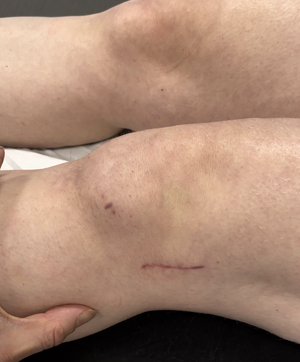
Most often during sports or activities they have had a noncontact twisting injury where they feel or hear a snap. They often fall to the ground and the knee swells up immediately and is painful. They are generally unable to continue doing the activity they were doing or playing the sport they were playing.
If it is several months or even years after their original knee injury, the swelling may have resolved, but if they are feeling that they can’t “trust the knee” or if it is collapsing or giving way when turning or pivoting and feeling unstable, one of the causes of this may be an undiagnosed ACL tear.
There are times when the ACL ruptures with less pain and swelling.
What’s the difference between an ACL tear, rupture or injury?
There is no difference between ACL tear, rupture or injury. The terms are interchangeable.
Why are kids ACL injuries becoming more common?
ACL injuries in children are becoming increasingly common. Although the cause of this is not confirmed, it is likely that children are playing more competitive sports more frequently, many adolescents are also much bigger in height and frame than they were 20 years ago, and injuries are being diagnosed more frequently because MRI scans are readily available.
What is the mechanism of paediatric ACL injury?
Most paediatric anterior cruciate ligament injuries occur as the result of a noncontact twisting injury. This can occur in twisting sports such as soccer, netball, skiing, lacrosse, basketball.
As with adults, the shin bone moves out of position relative to the thigh bone, the so-called pivot type injury.
Can other structures be injured as well as the ACL?
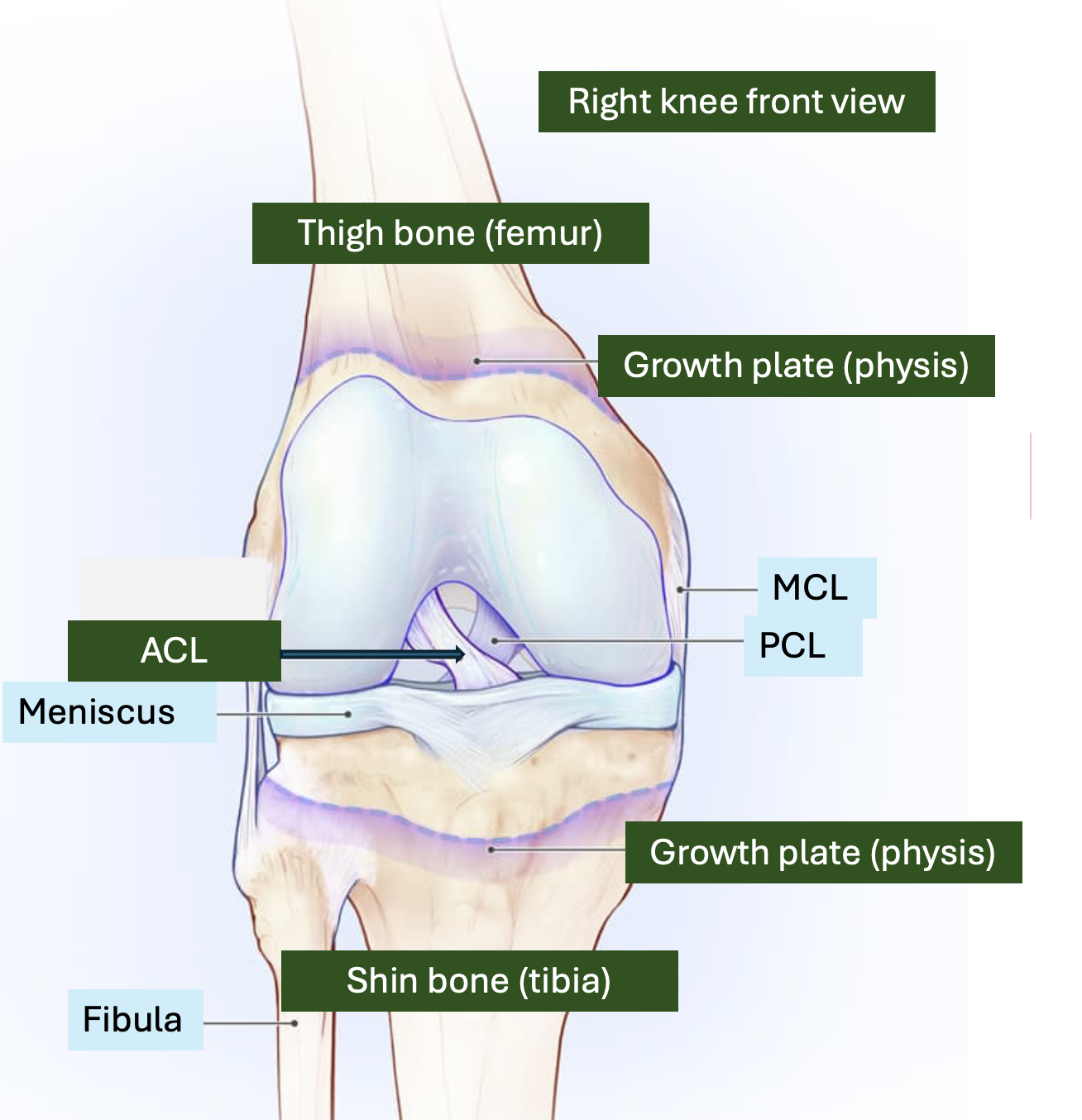
The most common structures that are involved that are injured in conjunction with the ACL are the medial collateral ligament, meniscal cartilages, and sometimes bruising occurs on the bones of the femur and tibia, the so-called pivot bone bruise or impaction fracture.
How do we diagnose paediatric ACL injuries?
As with adults, diagnosis depends on a thorough history of the accident, and examination of the knee, particularly when it is less sore or swollen.
Is an MRI scan necessary to diagnose an ACL injury?
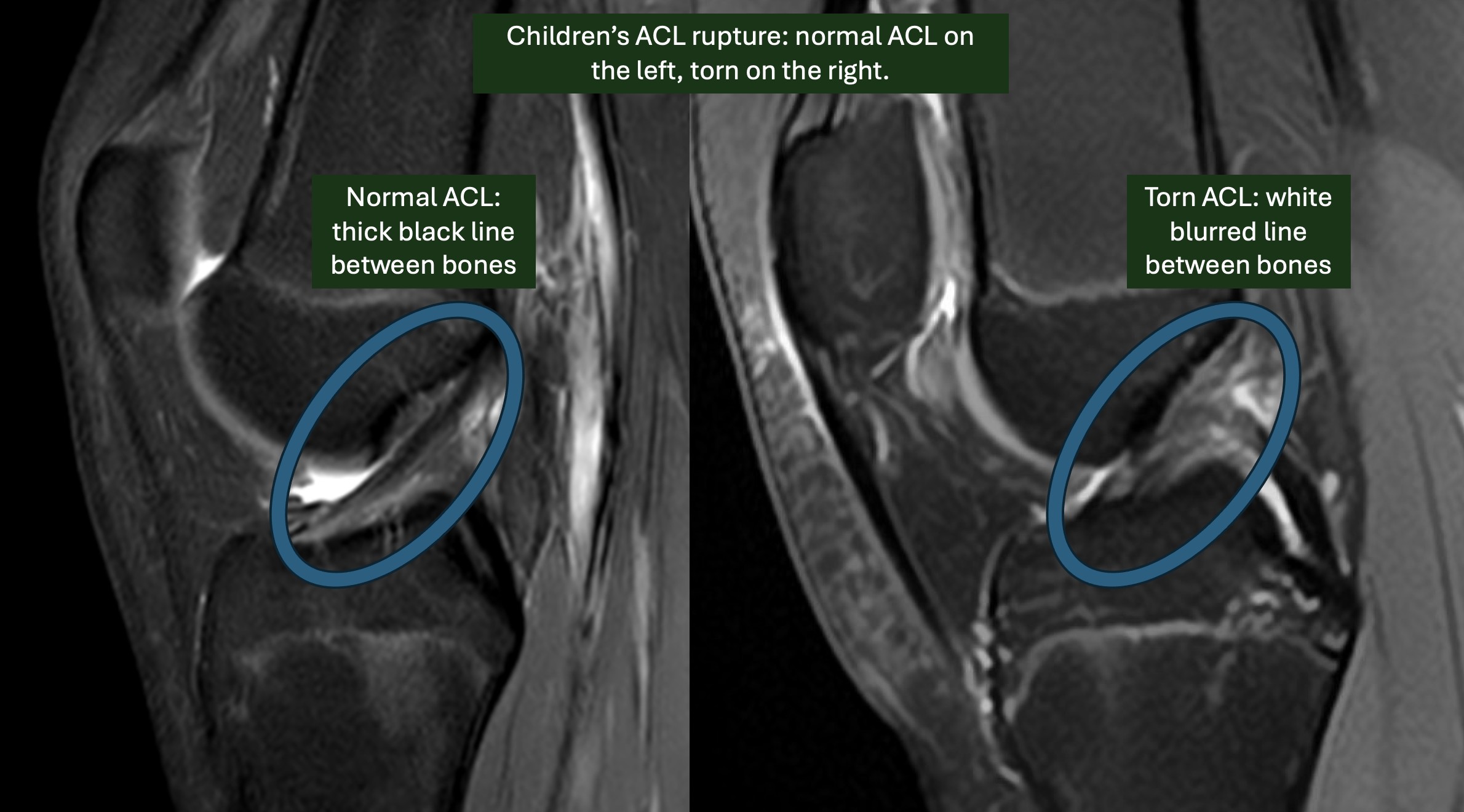
It is becoming increasingly clear that any child who has a swollen knee as the result of an injury should have an MRI scan to determine which structure has been damaged. ACL injuries are most commonly confirmed by MRI scanning.