How much does ACL surgery cost in the UK?
The Cost of ACL Surgery in the UK: NHS vs Private (2026 SportsHealing Guide)
Introduction
Anterior cruciate ligament (ACL) injury is one of the most significant knee injuries affecting athletes and active adults. The decision to undergo ACL reconstruction involves clinical, functional, and financial considerations.
This guide provides a transparent breakdown of:
- NHS versus private ACL surgery pathways
- What determines cost
- What you are actually paying for
- Long-term economic implications
- When private treatment may or may not be appropriate
This is not a promotional document. It is a decision framework.
What Is ACL Reconstruction?
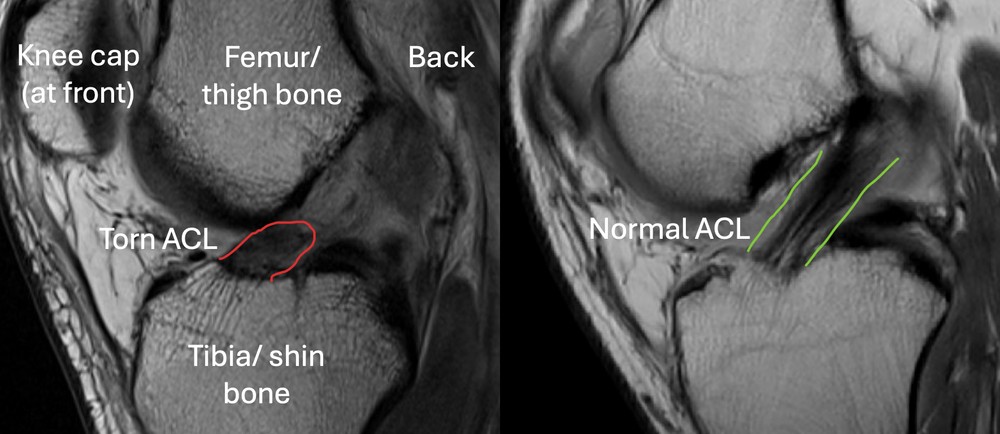
ACL reconstruction is a surgical procedure that replaces a torn anterior cruciate ligament with a graft, typically harvested from:
- Hamstring tendon
- Patellar tendon
- Quadriceps tendon
- Donor tendon from a cadaveric donor
The aim is to restore rotational stability and prevent secondary meniscal and cartilage damage.
In young or high-demand individuals, untreated instability increases risk of further intra-articular injury.
ACL Surgery on the NHS
What is the Direct Cost to the Patient for NHS ACL?
NHS ACL reconstruction is free at the point of delivery.
Waiting Times
Waiting times vary significantly by region and current service pressure and vary between 18 weeks to 18 months. Delays may include:
- Initial GP referral
- Orthopaedic assessment
- MRI imaging
- Surgical scheduling
- In some areas, surgery may occur within weeks. In others, delays may extend several months.
Clinical Considerations
Delay matters in unstable knees.
Multiple cohort studies demonstrate that persistent instability increases risk of:
- Meniscal tears
- Chondral injury
- Early degenerative change
However, not all ACL injuries require immediate reconstruction. Some patients function well with structured rehabilitation alone.
The key determinant is instability profile, damage to additional stuctured and functional demand.
For further knowledge on this please click
Private ACL Surgery in the UK
Typical Cost Range (2026)
Private ACL reconstruction typically ranges from:
£8,000 to £18,000
Cost variation depends on:
- Hospital setting
- Consultant fee structure
- Anaesthetic team
- Implant and fixation devices
- Inpatient stay
- Rehabilitation package inclusion
London and major metropolitan centres often sit at the upper end of the range
What Determines Private ACL Cost?
Surgeon Expertise and Case Complexity
Higher-volume specialist surgeons often manage:
- Complex instability patterns
- Revision surgery
- Concomitant cartilage or meniscal procedures
- Experience influences decision-making precision.
Hospital Infrastructure
Premium private facilities provide:
- Advanced arthroscopic equipment
- Dedicated orthopaedic theatres
- Enhanced infection control protocols
- Integrated imaging access
- Infrastructure influences cost base.
Implant and Fixation Devices
ACL graft fixation can require a combination of:
- Interference screws
- Cortical buttons
- Anchors
Implant selection influences pricing.
Anaesthetic and Multidisciplinary Support
Comprehensive peri-operative care includes:
- Anaesthetist
- Operating department practitioners
- Physiotherapy coordination
- Post-operative nursing
Surgery is a team event.
Is Private Surgery “Better”?
This is the wrong question.
The correct questions are:
- Is timing important, either for the patient’s life or the knee?
- Is instability causing secondary damage?
- Is there access to high-quality imaging?
- Is rehabilitation integrated and structured?
Many NHS units provide excellent ACL care. Private care may offer:
- Faster access
- Continuity of consultant-led care
- Enhanced scheduling flexibility
The decision depends on your needs and means.
Economic Consequences of Delay
Delayed reconstruction in persistently unstable knees increases risk of:
- Medial meniscal tears
- Lateral meniscal root injury
- Articular cartilage defects
- Secondary damage increases long-term osteoarthritis risk.
Thus, financial decisions must incorporate biological timing.
Return to Sport and Long-Term Value
Successful ACL reconstruction requires:
- 9–12 months structured rehabilitation
- Neuromuscular retraining
- Psychological readiness assessment
The true cost includes rehabilitation commitment, not simply the operation.
Private settings may offer:
- Closer physiotherapy integration
- Faster access to follow-up
- Structured return-to-sport testing
These factors influence outcome more than operating theatre aesthetics.
Insurance Considerations
Many private patients undergo ACL surgery through:
- Private medical insurance
- Corporate policies
- Sports injury coverage
Out-of-pocket payment is not universal.
Patients should clarify:
- Excess
- Implant coverage
- Physiotherapy inclusion
- Follow-up consultation fees
Transparency prevents surprise billing.
When Surgery May Not Be Necessary
Not all ACL ruptures require reconstruction.
Non-operative management may be appropriate in:
- Low-demand individuals
- Partial tears without instability
- Patients prepared to modify pivoting sport
Rehabilitation-first approaches may be very reasonable.
The decision must be driven by the patient once they are fully informed of the risks and benefits of both surgery and non surgical management.
Revision ACL Surgery Costs
Revision ACL reconstruction typically costs more than primary surgery due to:
- Technical complexity
- Increased operating time and expertise
- Bone grafting requirements
- Additional implants
- The success rate of revision surgery is regrettably not as good as primary surgery
- Nevertheless, a well executed and planned revision can restore stability and return to play and activity in many cases.
Avoiding poorly indicated or poorly executed primary surgery reduces long-term cost burden.
—
Frequently Asked Questions
Does higher price mean better outcome?
No. Outcome depends on surgical precision, rehabilitation adherence, and patient biology.
Is NHS care inferior?
No. Many NHS centres provide outstanding ACL care. Variation relates more to access and timing than inherent quality.
Should young athletes wait?
Persistent instability in young athletes increases secondary injury risk. Early evaluation is advisable.
Decision Framework
Ask:
- Is my knee unstable?
- Am I experiencing giving way?
- Is imaging high quality?
- What is my activity goal?
- What are the long-term cartilage implications?
Cost is one variable in a multi-factor decision.
Conclusion
ACL reconstruction is not a commodity purchase.
It is an intervention intended to protect long-term joint health.
NHS care provides essential access.
Private care may provide speed and structural continuity.
The appropriate pathway depends on:
- Instability severity
- Timing
- Functional demand
- Personal circumstances
The objective is not simply to restore sport.
It is to preserve the knee for decades.
We wish you the best of luck in your journey to recovery!
If you would like an appointment or a review please click here