An osteochondral injury can occur due to a traumatic injury, such as a fall or a direct blow to the joint, a repetitive stress injury, or it may develop over time due to wear and tear on the joint. The exact cause of OCD is not fully understood, but it is thought to be a combination of genetic, environmental, and mechanical factors. Certain sports that place repetitive stress on the joints, such as gymnastics, football, or basketball, have been linked to an increased risk of developing OCD. Other factors include:
- Rapid growth of skeleton in teenage years
- Vitamin D deficiency
- Family history and genetics
- Direct impact injuries
The symptoms of an osteochondral injury can include:
- pain,
- swelling,
- stiffness,
- clicking locking or giving way
- reduced range of motion in the affected joint.
Diagnosis
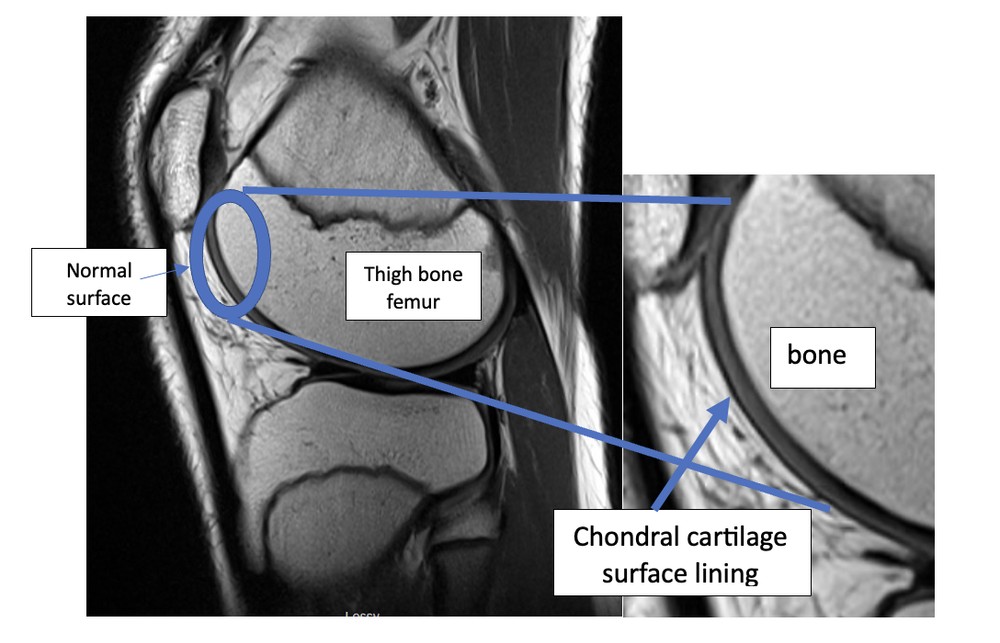
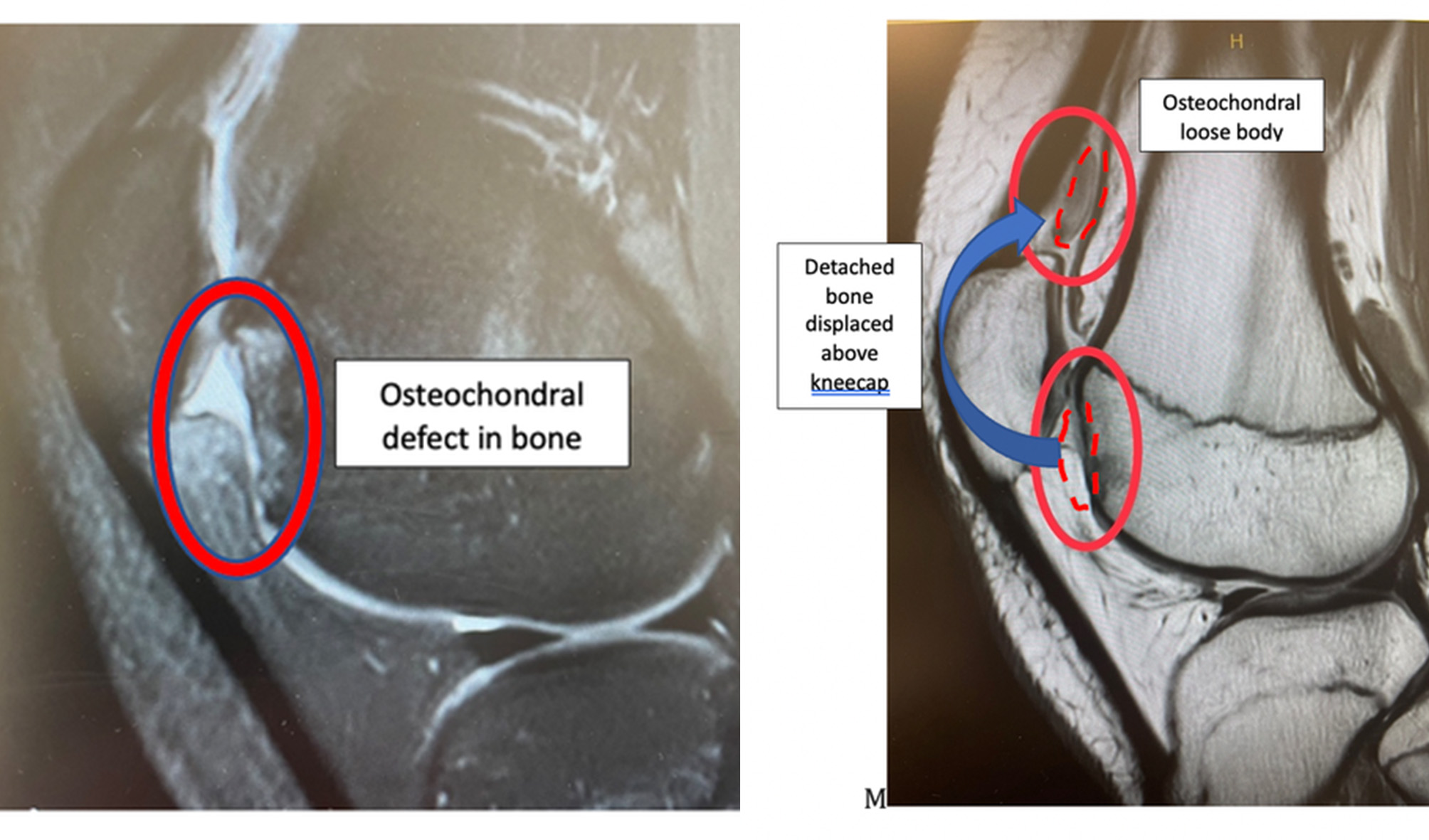
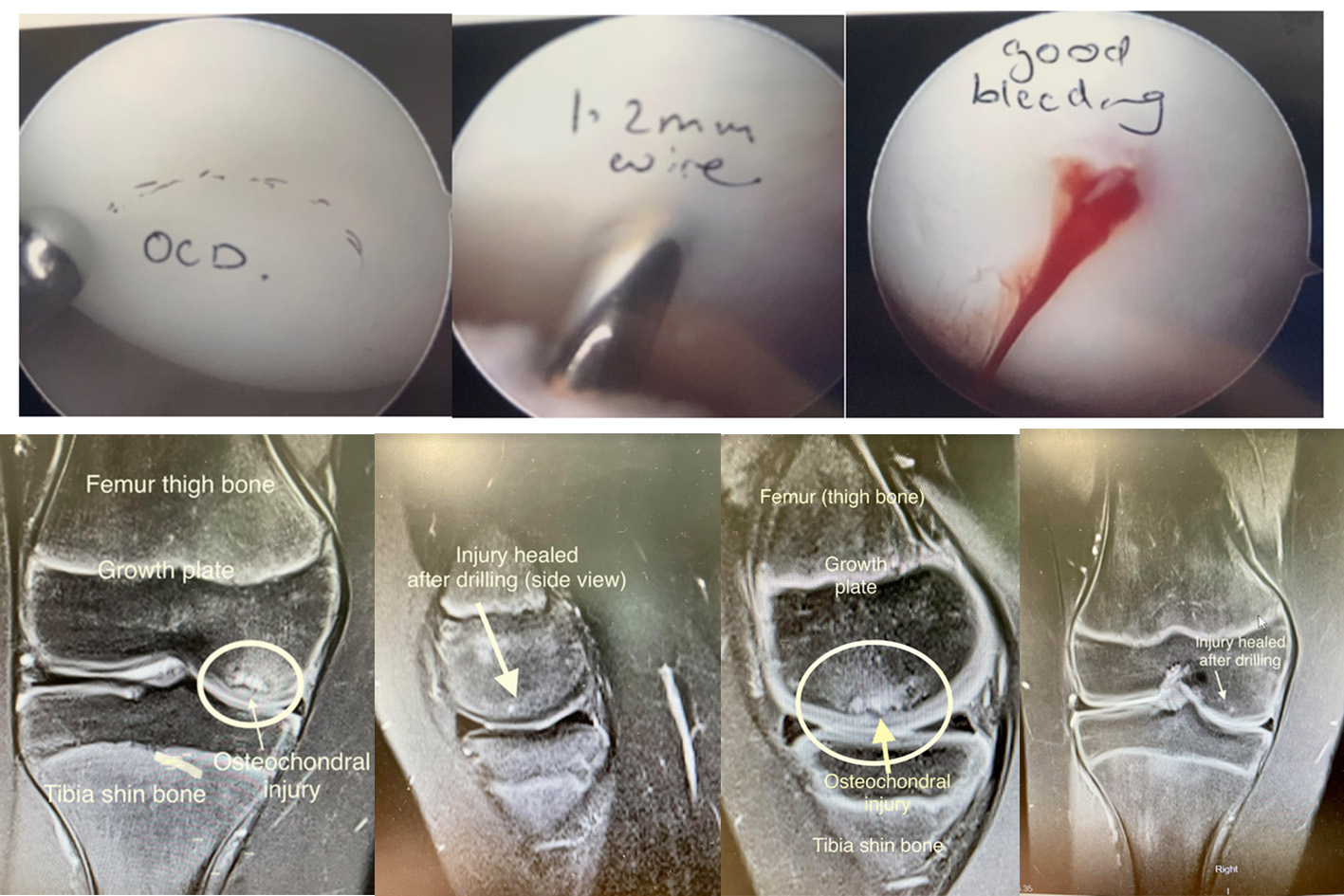
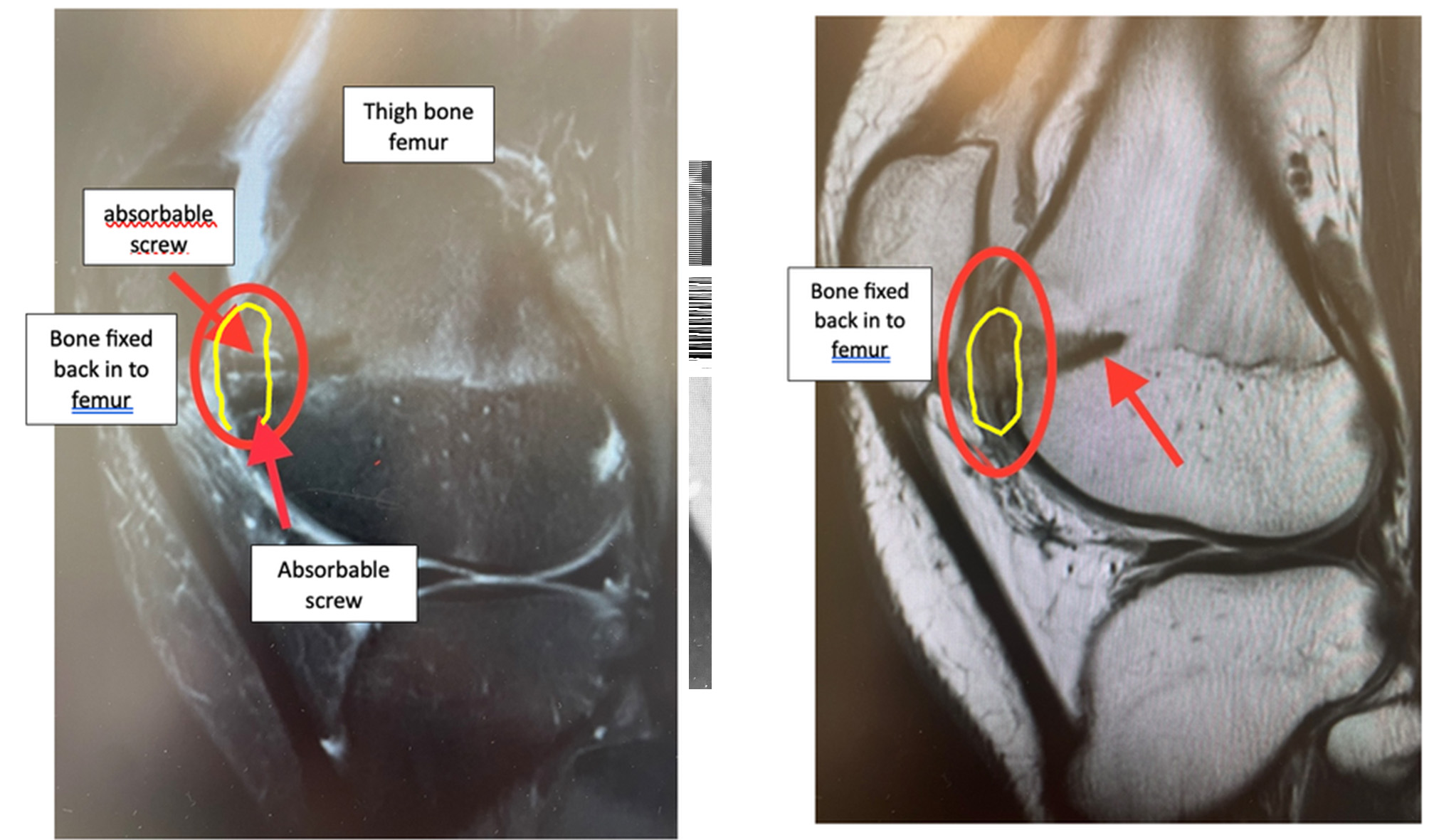
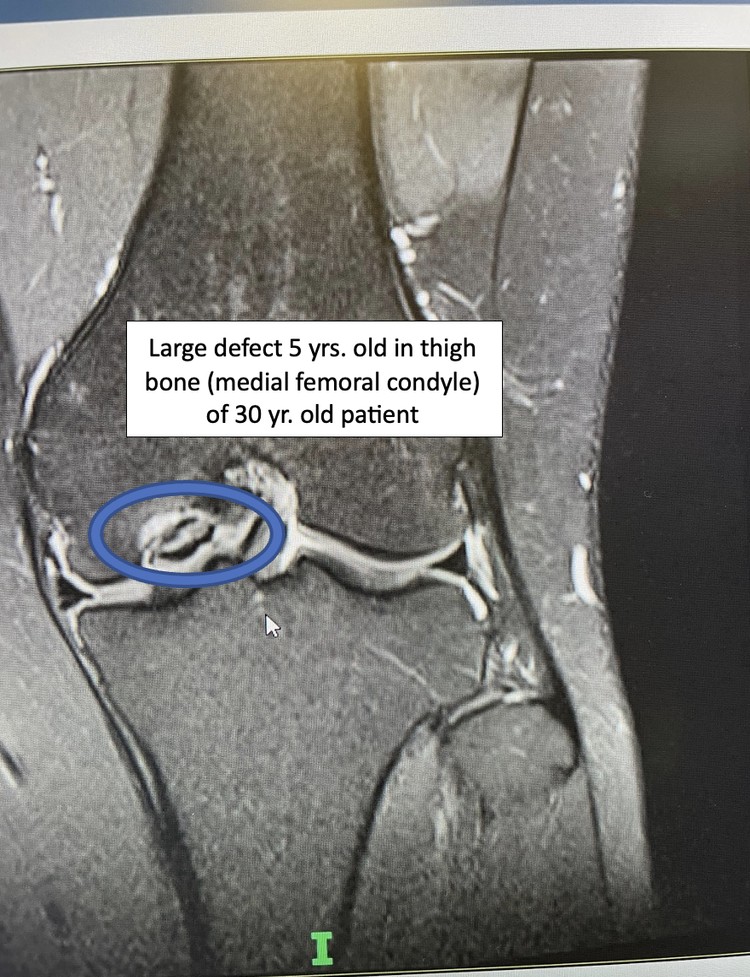
The most reliable test in confirming the presence of an osteochondral injury is an MRI scan.
MRI scan of osteochondral injury of the thigh bone (femoral trochlea):